
Gluviora
Glucose sensing that stays on the skin
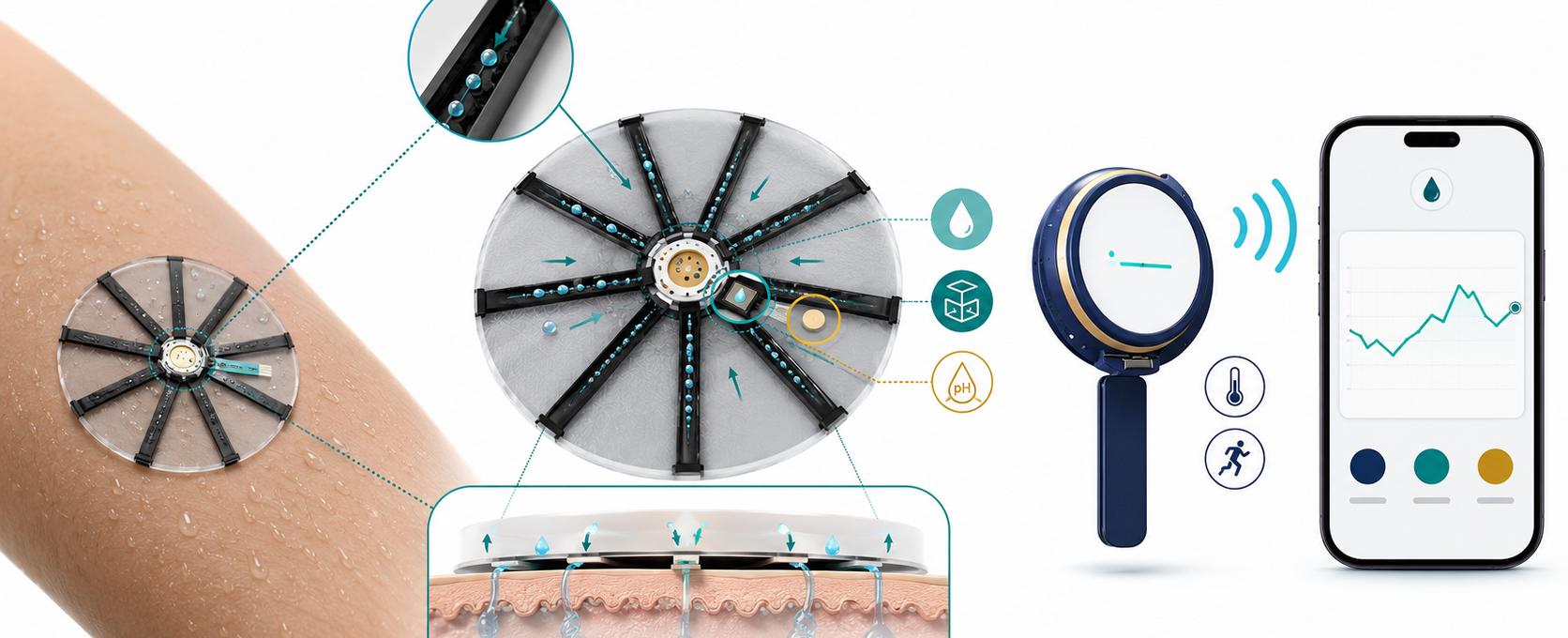
Gluviora is Noura Tech Innovations’ wearable platform for reading glucose-related signals from sweat. The design brings sensing, sample handling, electronics and data into one path—without a sensing filament under the skin.
Discuss a collaboration About the company

The problem with today’s monitors
A modern continuous glucose monitor is a high standard: trends, alarms and clinical workflows people already trust. Insertion, adhesives and access still make wearing one difficult for many people. That is a reason to research a surface-worn route. It is not proof that a sweat-based sensor is ready for care.
The Gluviora approach
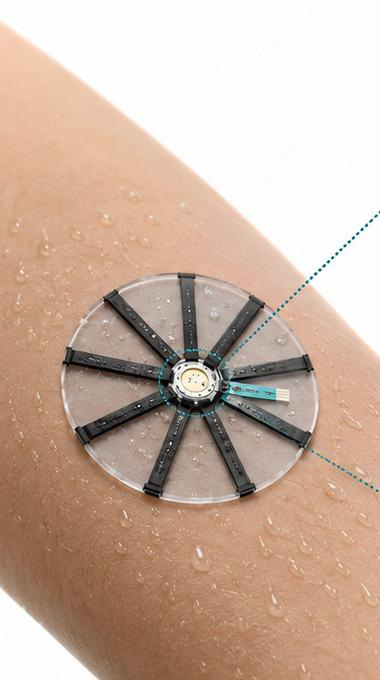
Gluviora is designed to stay on the skin and use sweat as the sample. Nanostructured electrochemical sensing, sweat transport, wearable electronics and AI-assisted analysis are treated as one measurement chain, because a useful number depends on more than the sensor material.
How it is meant to work
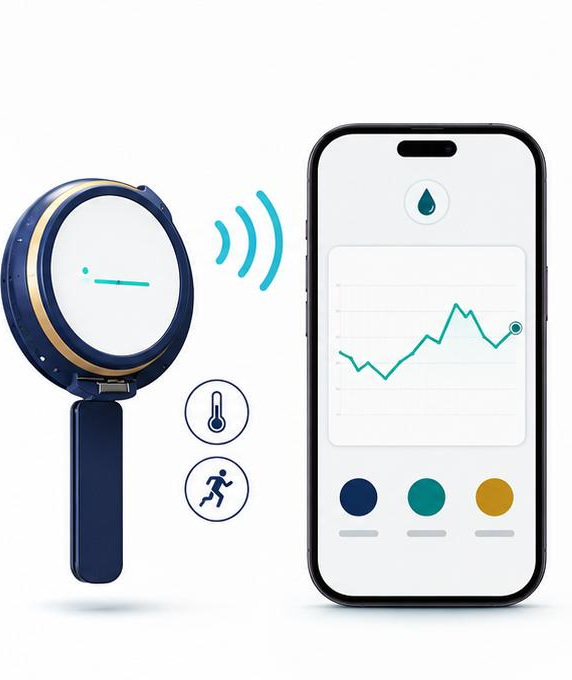
A skin-worn patch collects and conditions sweat, the sensing layer reads glucose-related signals, supporting measurements such as temperature and motion help interpretation, and a low-power link can carry a record to a reader and app. Comfort, contact and repeatable placement remain engineering questions.
Platform elements
- Nanostructured electrochemical glucose sensing
- Sweat transport and conditioning
- Non-invasive sweat stimulation
- Wearable electronics and wireless data transmission
- Temperature and motion compensation
- AI-assisted signal analysis and calibration
What we expect the design to improve
The intended advantages are comfort (no implanted filament), a wearable form, and a data path that can be reviewed with everyday context. These are design goals. They are not clinical claims.
TRL 4 laboratory work
Key components have been demonstrated in a laboratory environment (TRL 4). The next stage is an integrated prototype, with usability, performance and regulatory readiness as the priorities. Gluviora is not offered for sale and has no CE mark.
Selected publications
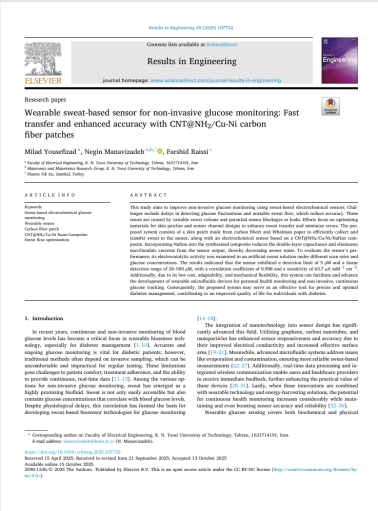
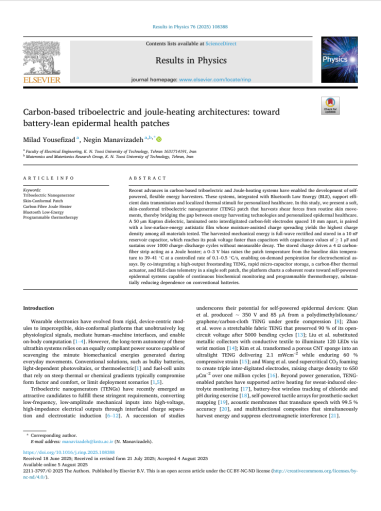
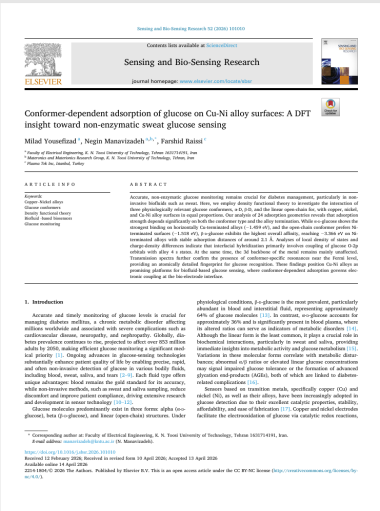
Three peer-reviewed papers by the founding scientific team sit behind the platform. They are laboratory research, not clinical evidence for a finished device.
Patent and next steps
A Spanish patent application has been filed and is fully owned by the company. From TRL 4 the path is integrated validation, then the evidence a CE-marking route would require. There is no commercial launch and no patient product to purchase.